My First Duathlon Before Summer Ended
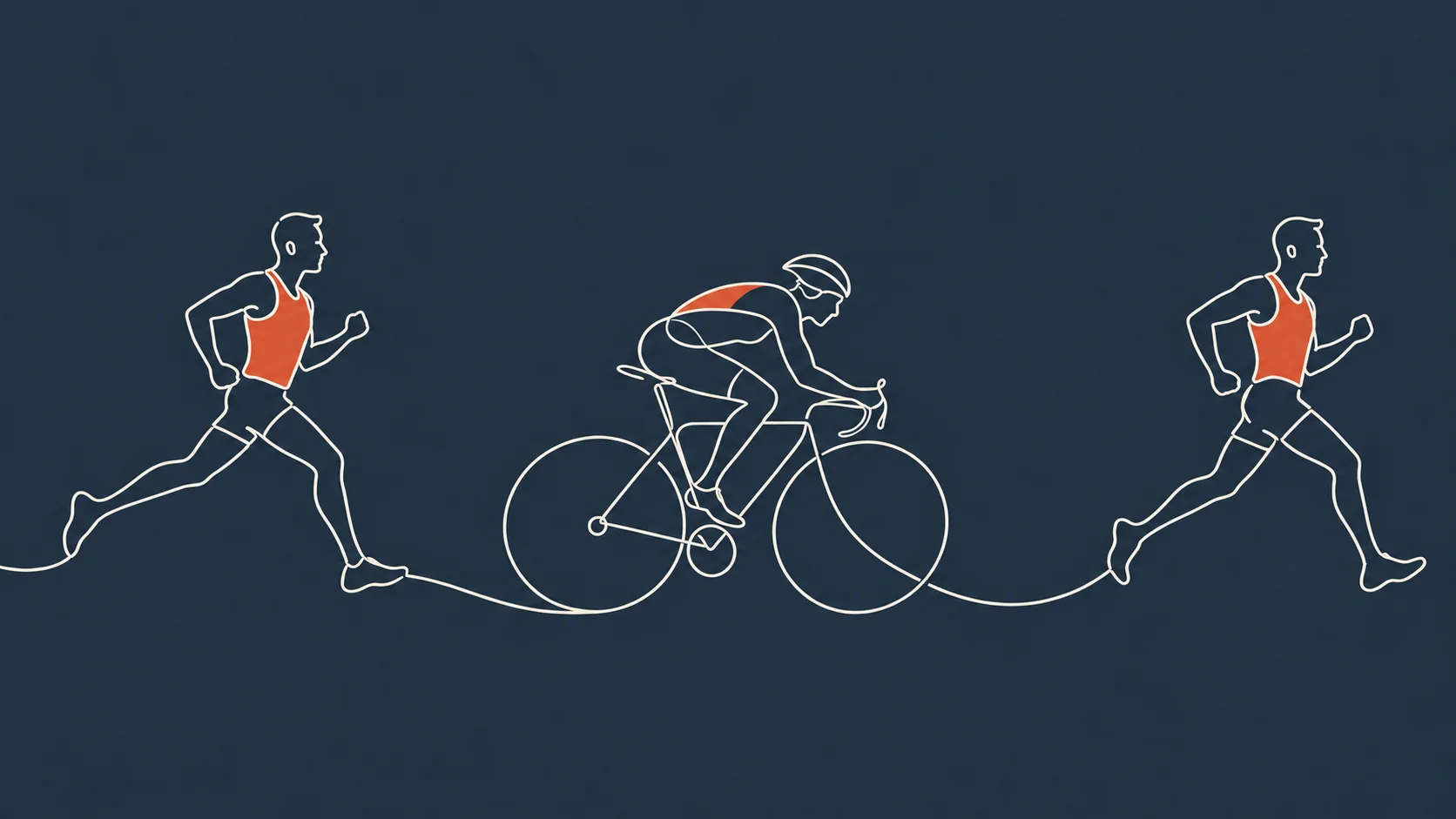
Why I needed something different
With summer and my early 30s coming to an end, I wanted to do something outside my routine and challenge myself.
A duathlon seemed like the right kind of unfamiliar. I liked that it was simple to explain and hard to do. I decided to do it solo rather than register for an official race. Besides, I already know how to suffer alone; I did not need to pay an entry fee for it.
Why It Was on My Bucket List
Completing a duathlon had been on my bucket list for a while, but lately I had prioritized mountain biking, and running is not my cup of tea.
I was not trying to be fast. I wanted to prove that getting older did not mean choosing comfort. I will soon be a father, and I did not want to keep putting this off. I wanted to make room for hard things in the life ahead.
The shape of the challenge
I considered a sprint (5 km run, 20 km bike, 2.5 km run) and an Olympic duathlon (10 km run, 40 km bike, 5 km run). The sprint did not feel hard enough. The Olympic asked for more running than I could prepare for in a few weeks. So I made my own: 5 km run, 30 km bike, 5 km run.
I needed to run again. For two years, I had mostly cycled and mountain biked. My first 3–4 km runs brought sore feet, sore knees, and pain in my inner thighs. I replaced one weekly ride with a run.
The bike did not worry me. I had been competing at Kelso all summer. I focused on getting fit enough to run and on preparing for the transitions.
I feared the final run. I knew my quads would feel heavy after the bike. Brick workouts helped me get used to that feeling. They also showed me what the transitions would feel like and how long they would take.
I planned four weeks of practice. I got three and did the duathlon a week early. The window was closing, and waiting another week felt like another excuse. I was not fully ready. That was the point.
My goal was two hours. I planned to run each 5 km at about five minutes per kilometre and ride the 30 km in one hour. That left 10 minutes for transitions.
What was hard
The first test
The first run showed me I had not warmed up enough. I could not find the pace I wanted, and the first kilometres felt hard. I had no choice but to keep moving. I had some homework to do.
Learning to transition
Transitions were the unknown. Brick workouts prepared me for the strange feeling of getting off the bike, but not for the rush of changing gear. The first one took too long. The second was better.
The final run
The final run was what I feared most. My quads felt heavy when I left the bike, and my knees started to hurt. I could not hold the pace I wanted. At that point, I stopped chasing the time and focused on finishing.
What came easier than expected
The bike surprised me. After the first run, I expected to feel flat. Instead, I held my usual race pace. Mentally, I was fine. My knees and quads were the problem. At 91 or 92 kg, I felt every step. The brick effect was not as bad as I expected, but the second run still felt longer and harder.
The numbers
| Segment | Planned distance | Actual distance | Time | Pace / speed | Strava |
|---|---|---|---|---|---|
| Run 1 | 5 km | 5.91 km | 29:42 | 5:02/km | Activity |
| Transition 1 | — | — | 6:10 | — | — |
| Bike | 30 km | 32.70 km | 1:06:51 | 29.4 km/h | Activity |
| Transition 2 | — | — | 3:30 | — | — |
| Run 2 | 5 km | 5.11 km | 29:37 | 5:47/km | Activity |
| Total | 40 km | 43.72 km | 2:15:50 | — | — |
The route
What I learned from making it hard
Endurance is built in the weeks before the event. For me, the hard part is following the plan. That work gave me confidence and made the fears in my head smaller. I did not chase a pace. I wanted a hard day that I could still enjoy. I also learned that transitions need practice. They are short, but they add stress.
What is next
Finishing the duathlon reminded me what I can do when I follow a plan. Getting older does not mean I have to stop taking on hard things. I hope one day it will be a story I can tell my son when he is older.